
Dimensional Geometry
Foundations
A GEOMETRIC FRAMEWORK FOR MULTI-DIMENSIONAL THINKING
Abstract
This educational introduction presents geometric concepts used to study dimensions, transformations, cross-sections, projections, and topology. It establishes vocabulary and guided exercises for reasoning about spatial structures.
It is not a claim of a newly validated physical theory. Speculative applications require separate definitions, predictions, and evidence.
Key Concepts
- Dimension and geometric representation
- Translation and rotation
- Boundaries, edges, and vertices
- Cross-sections versus projections
- Topology and continuity
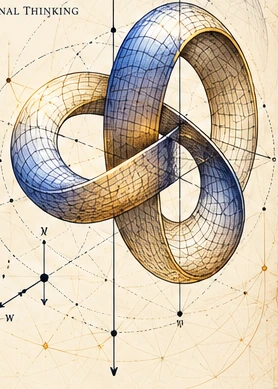
1. Core Principles
A point has no spatial extent. A line segment is one-dimensional; a square region is two-dimensional; a cube is three-dimensional.
A square has four edges and four vertices. A cube has six faces, twelve edges, and eight vertices.
2. Mathematical Framework
Rigid translations and rotations preserve lengths and angles. We can express a transformation using a rotation matrix R and a translation vector t:
Cross-sections intersect objects with planes; projections map objects into a lower-dimensional representation.
3. Guided Investigation
- Draw a square and label its edges.
- Translate and rotate it; note invariants.
- Sketch a cube and its hidden edges.
- Compare three parallel cuts through a sphere.
- Describe what a projection loses.
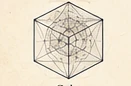
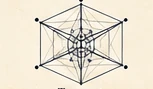
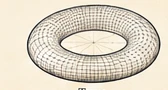
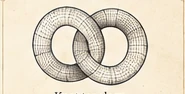
4. Visual Models
5. Applications
- Physics and spatial modeling
- Information and network visualization
- Education and design
- Cognitive and spatial reasoning exercises
6. Evidence & References
The dimension, transformation, and cross-section definitions here are standard mathematical concepts. This introductory page does not yet provide a formal bibliography or independent empirical test results.
7. Limitations
- Illustrations are not physical evidence
- Projections omit information
- Physical claims require independent testing
Open Questions
How can higher-dimensional ideas be represented without confusing visual analogies with physical mechanisms? What mathematical assumptions are required for each model?
Revision History
October 2026 — visual reading edition aligned with the approved PixelMagic Studios wireframe; existing introductory geometry explanations retained and reorganized.
Explore the Public Version →